

Vermona Piano Strings vs. ARP Omni: An In-Depth Comparison
The comparison between the Vermona Piano Strings and the ARP Omni is fascinating not only due to their similar features and the era in which they were created, but also because it offers insight into the distinct musical and technical approaches of the GDR and the USA during the 1970s.
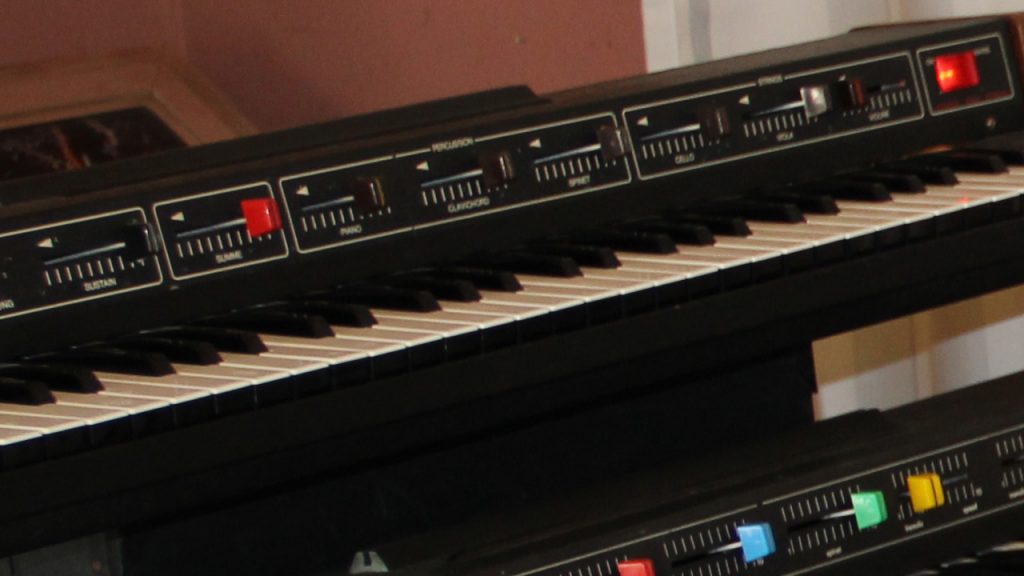
Similarities and Differences: Vermona Piano Strings vs. ARP Omni
Sonic Character
- Vermona: Renowned for its warm, slightly gritty, and often “woody” tonal quality. The strings possess a characteristic presence that excels particularly in rich pads and atmospheric textures.
- ARP Omni: The sound is frequently described as wider and fuller, with a distinct “silkiness.” Its string section offers greater dynamic range, capable of producing everything from lush, gentle washes to aggressive, cutting leads.
Architecture
- Vermona: Utilizes a unique combination of analog and digital circuitry, resulting in a one-of-the-kind sonic signature.
- ARP: Relies on a purely analog signal path, which provides a more organic and inherently “classic” warmth.
Modularity & Flexibility
- Vermona: Offers a certain degree of modularity but does not reach the same level of flexibility found in the ARP Omni.
- ARP Omni: Features a more modular internal design, allowing for a broader variety of sound manipulation and routing possibilities.
Availability & Collectability
- Vermona: Originally available primarily in the GDR (East Germany) and other Eastern Bloc countries; it has become a rare and highly sought-after gem for collectors today.
- ARP: Was widely distributed globally and remains relatively easy to source on the second-hand market, though typically commanding significantly higher premium prices.
Why are these differences important?
- Musical Application: The distinct sonic characters of these two instruments make them appealing for different musical styles. While the Vermona Piano Strings is often utilized in electronic music and New Age, the ARP Omni also finds application in rock and pop.
- Collector’s Value: The rarity and unique sound of the Vermona Piano Strings make it a highly sought-after collector’s item, whereas the ARP Omni is somewhat more affordable due to its wider distribution.
- Technological Evolution: The differences in architecture reflect the distinct technical approaches of the two manufacturers and shed light on the state of synthesizer technology during the 1970s.
The Cultural Context:
- Vermona: Developed in the GDR, the Vermona Piano Strings embodies the efforts of socialist nations to establish their own domestic electronic musical instrument industries.
- ARP: As a US-based manufacturer, ARP represents the most innovative facet of Western synthesizer development.
Both the Vermona Piano Strings and the ARP Omni are fascinating instruments that played a pivotal role in shaping the evolution of electronic music during the 1970s. Their differences and similarities render them invaluable historical artifacts—witnesses to an era when synthesizer technology was still in its infancy.