

The film (a sci-fi comic silent movie)—but take note: this is genuine art, featuring a generous dose of dark humor directed at space documentaries.
Original Finnish title “Kalevi Findusonin fantastiset seikkailut” (2021)
(“Фантастических приключений Калеви Финдусона”)
roskiewicz film presents “The Fantastic Adventures of Kalevi Finduson”
featuring an outstanding cast:
Nölgenhart Buorilier Zulandé – (O.S.F)
Vilminghe Scheerboltingenhausen Wiemershaith – (WBFO)
Malgovich Grügentolger van de Krangweifel – (WBFO)
Lorenzo Slavio Menchinelli – (O.S.F)
Bugo Negdirius Swelone – (HLS)
Bollrich “Rix” Chrellbalov – (GvFmZ)
Resine Welana Miij – (9E)
(:)
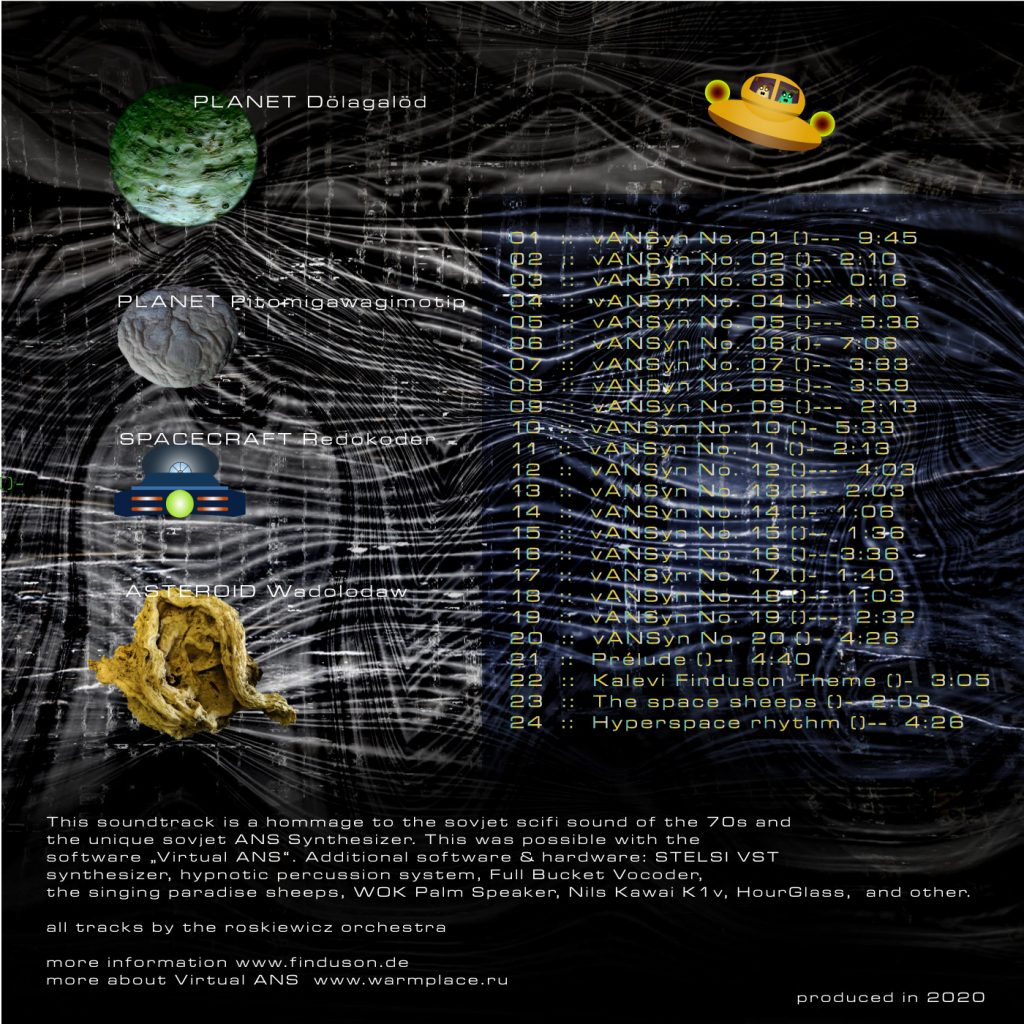
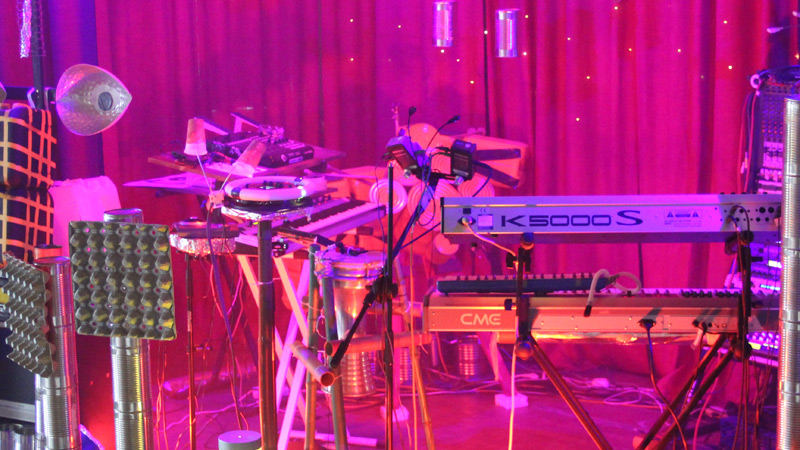
Fascinating soundscapes and technologies—such as the “Singing Paradise Sheep” or the “Hypnotic Percussion System”—are featured here. A unique element is the use of a Russian software emulation of the Sovjet ANS-Synthesizer (WarmPlace, Russia), an instrument originally developed in the Soviet Union during the 1930s. It produces the quintessential Soviet sci-fi sound of the 1970s. To harmonize the ANS tones—allowing for the integration of additional instruments, melodies, and chords—the synthesizer’s distinctive sounds were processed through a vocoder. All in all, this was a highly elaborate and specialized sound design project. The entire film score stands out as a top-tier, unique production, drawing on vintage, specialized technologies that are completely overlooked by the trend-obsessed mainstream.
Fascinating sound images & technologies like that singing paradise sheep or the hypnotic percussion system. The software emulation of the ANS synthesizer is used as a special feature. The ANS synthesizer is a Soviet development from the 1930s. The musical instrument creates the typical Soviet Sci Fi sound of the 70s.
Захватывающие звуковые образы и подобные технологии поющая райская овца или гипнотическая ударная система В качестве специальной функции используется программная эмуляция синтезатора ANS synthesizer. Синтезатор ANS – советская разработка 1930-х годов. Музыкальный инструмент создает типичное звучание советской научной фантастики 70-х годов.
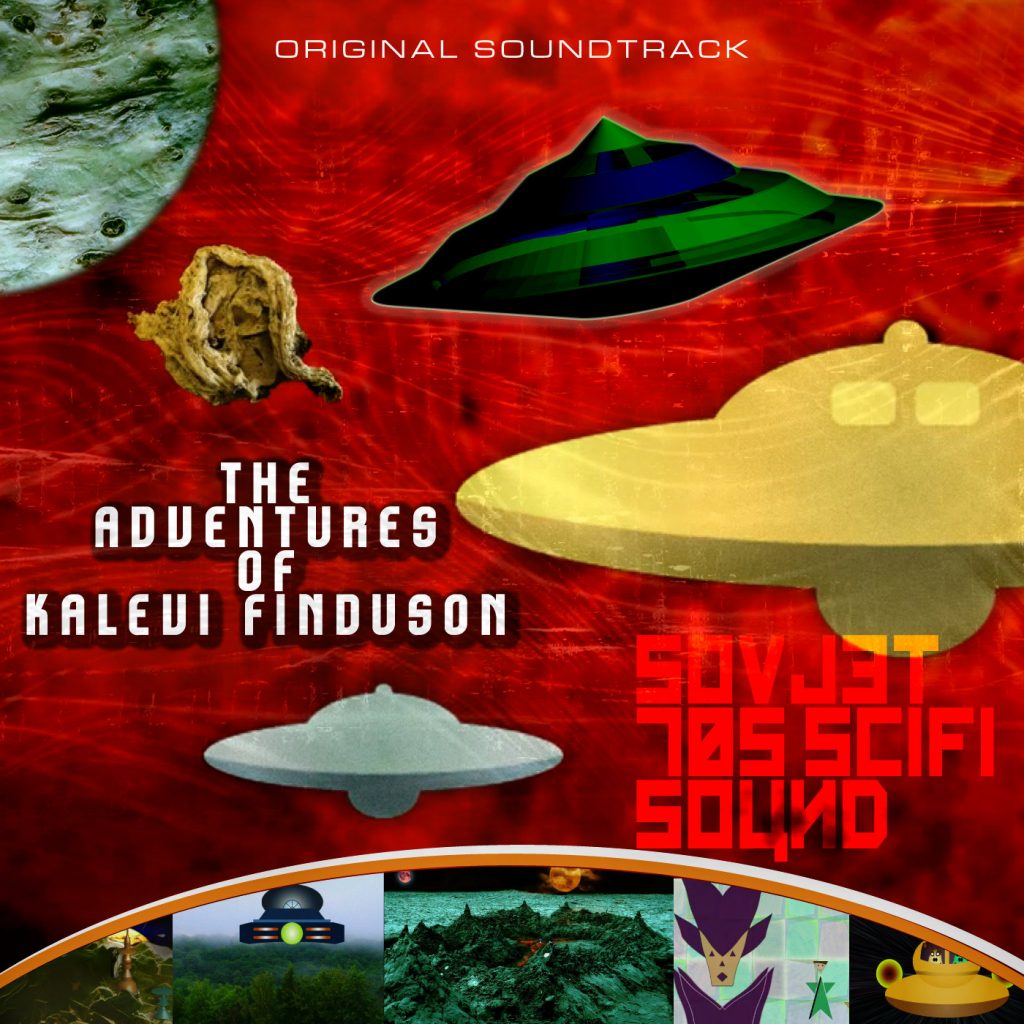
Synopsis: “While most people are asleep, experts in the metropolis of Plechovkavice on the planet Quodouq have spent the night analyzing data and discovered that the ‘Intertransmedialit’ (a secret intelligence code for an asteroid) known as ‘Wadolodaw’ is heading toward Earth. Wadolodaw has presumably been artificially influenced by the dark forces of the planet Ratukaninakutar. The Vektorians from the planet Pitomigawagimotip are attempting to exploit the situation by trying to seize Wadolodaw, believing it contains a treasure. Our hero, Kalevi Finduson, is called upon to save the day—a task he undertakes alongside his friends from the planet Dölagalöd, which lies far away. As a former secret agent of the former secret Finnish intelligence service, he possesses classified knowledge. Kalevi Finduson finds the solution using the ‘Sykibikys’ interstellar force shield—a ‘monotransmedial comparator’—which is capable of diverting the asteroid onto a different trajectory using isospectral stellar waves. Aboard his spaceship, the *Redokoder*, he embarks on long and adventurous journeys…” His motto, “Löydä meidät,” means “Find us on”
(:)
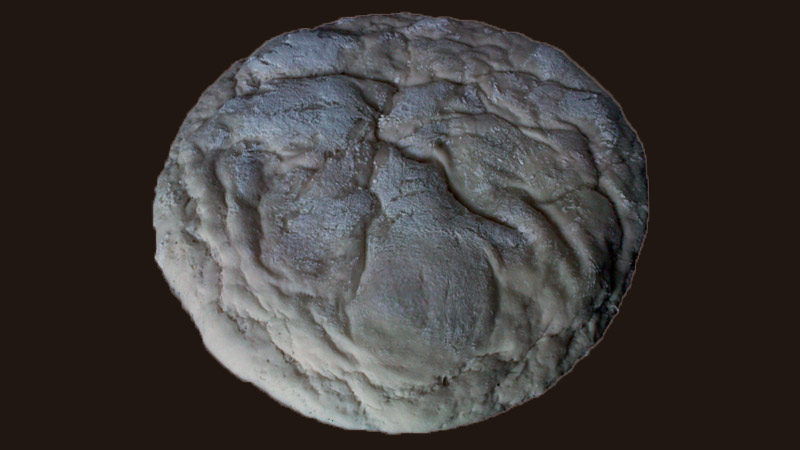
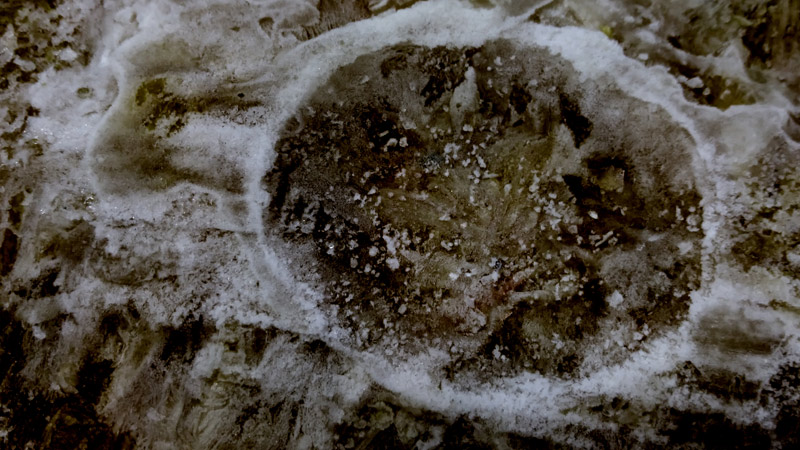
A sci-fi adventure featuring innovative special effects—specifically, old-school, creative, and sometimes humorous techniques used to bring landscapes and objects to life. A head of celery transforms into a giant planet resembling Jupiter, looking truly astonishingly realistic. A massive mound of raw bread-dumpling dough takes on the form of a vast icy landscape. The asteroid “Wadolodaw” is actually a roll of toilet paper that has weathered outdoors, acquiring a diffuse, eroded texture. With a bit of color grading and 1970s-style film scratches, the entire effect looks remarkably real.
Experts certain: “Best animated silent film.”
The tremendous response and exceptional creativity have turned the film into a real insider tip. Within the industry, the movie has garnered great praise and acclaim. Many critics and connoisseurs say it comes “highly recommended—with three exclamation marks.” It will be exciting to see how many awards this fantastic adventure sweeps up this year. The live adaptation is currently in an experimental phase at the heart of the fictional metropolis of “Plechovkavice.”
The Making of a simple Comic Movie
The comic’s adaptation relies on simple techniques but employs unusual methods—a combination of computer graphics and live-action scenes. It is as simple as it was a few decades ago, and that is precisely the point: it sparks imagination and creativity. This stands in contrast to today’s “possibilities,” where one can simply pick and choose more or less suitable elements from hundreds of gigabytes of graphics or audio libraries. Of course, one must consider the vast amount of time required to sift through such massive libraries. But back to the film. Naturally, one could create an icy landscape or a planet on a computer with complex, hyper-realistic detail. Yet, if you take a closer look around the kitchen, you will find many items that can be used in the film at a different scale. A stalk of celery inevitably calls to mind the planet Jupiter; the ingredients for a dumpling can form a fantastic icy landscape. It is, in essence, simple enough for anyone to pull off.

An album featuring sounds typical of sci-fi films had already been recorded based on the score. However, “Solaris” was recently revisited in a music video. Research into this classic led to a closer look at the “ANS synthesizer“—a massive instrument with a unique concept that produces a distinctive sound: the quintessential Russian sci-fi sound of the 1970s. Conveniently, a software emulation known as “Virtual ANS” is available, and it plays a pivotal role in the new score. The process began with the creation of new graphic patterns to serve as the basis for the synthesizer’s sound generation. Numerous audio sequences were produced using these patterns and then matched to specific film scenes based on their sonic character. This resulted in nearly 20 tracks for the film. Most of these tracks were processed using the same approach: the audio sequences were treated with expansive reverb effects and layered with additional tracks featuring vocoders, choirs, strings, and vintage synthesizer sounds. The production relied largely on freeware and older synthesizers; alongside some very modern software, it is worth noting that the average age of the hardware and software used is around 15 years. This fosters a creative process, as the simplest methods often yield the best results.
Nature, Environment, Interstellar Space
“One thing that is very close to our hearts,” said a spokesperson for the group, who went on to emphasize: “A huge ‘thank youuu!!!!!’—with three ‘u’s and five exclamation marks—goes to the helpers.” Rather than state-of-the-art technology, the simplest of means were employed to create this film. “Essentially, it is a low-budget production.” As a result, the film boasts an exceptionally brilliant environmental footprint—viewed in the context of the current situation and taking into account general requirements regarding future measures for collective efforts, both large and small, based on broad consensus and the aligned perspectives of all those involved.
Exclusive trailer for the film:

Production of the soundtrack
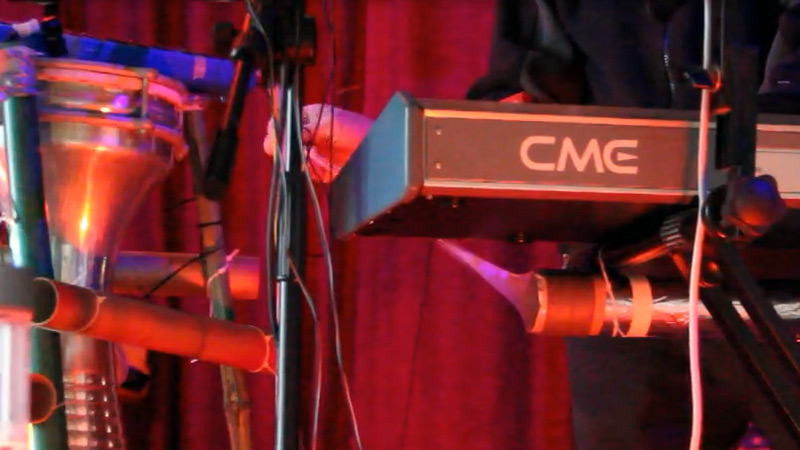
Numerous tracks were produced for the film score to ensure a varied selection suited to the specific scenes. Four tracks were carried over from the initial score: the intro and outro, a track based on the “Hypnotic Percussion System,” and the track featuring the singing sheep. Two fixed sets were used for the tracks created with the Virtual ANS, ensuring a consistent atmosphere and a cohesive overall sound. Additional instrumentation included choirs, atmospheric sounds, and vintage synthesizers. A specific setup was employed for this soundtrack, featuring—first and foremost—the Virtual ANS. Other instruments and effects in the setup included: Full Bucket Vocoder, STELSI Synth VST, imposcar VST, ARP 2600 VST, Nils Kawai K1v, WOK Palm Speaker, DSK Choirz, LABS Choirs, Full Bucket ragnarök, Melda plugins, and Valhalla Reverb.
Soundtrack Pattern for Virtual ANS Soviet Synthesizer
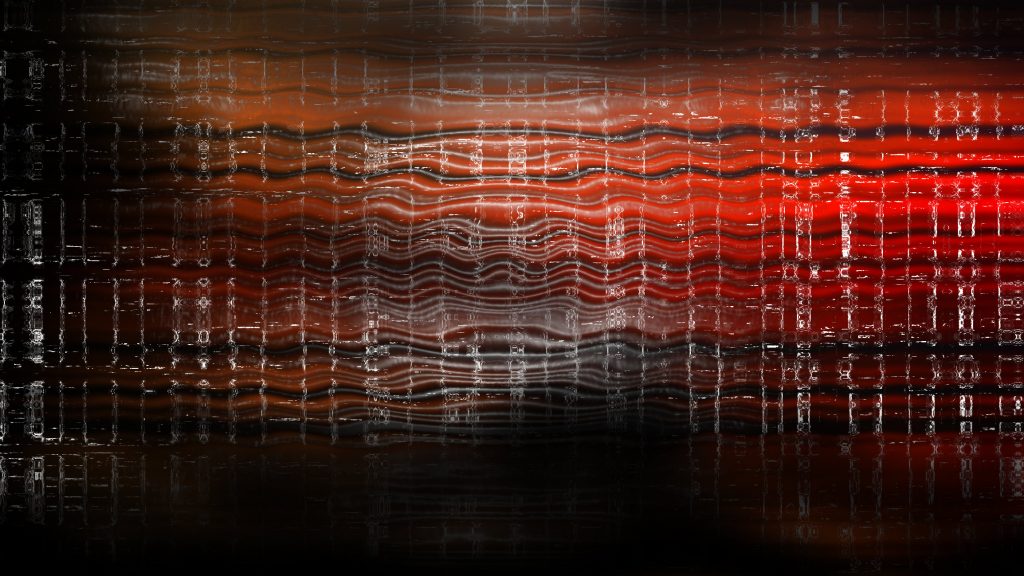
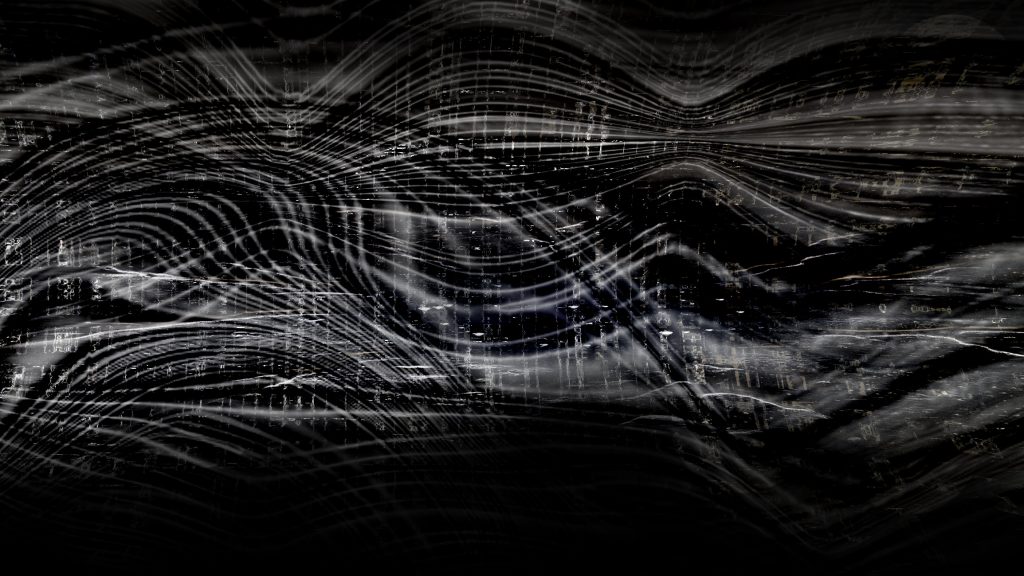
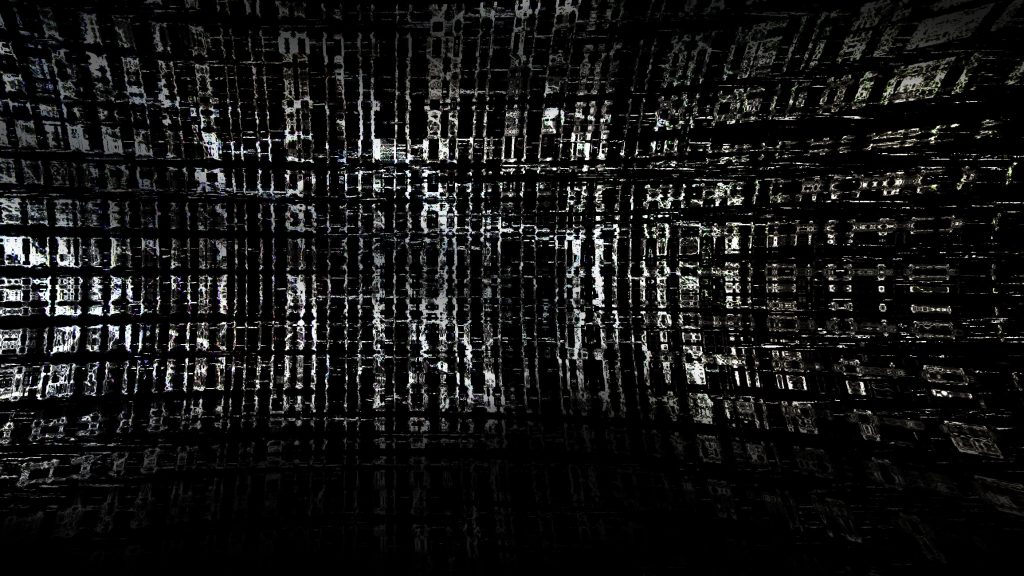
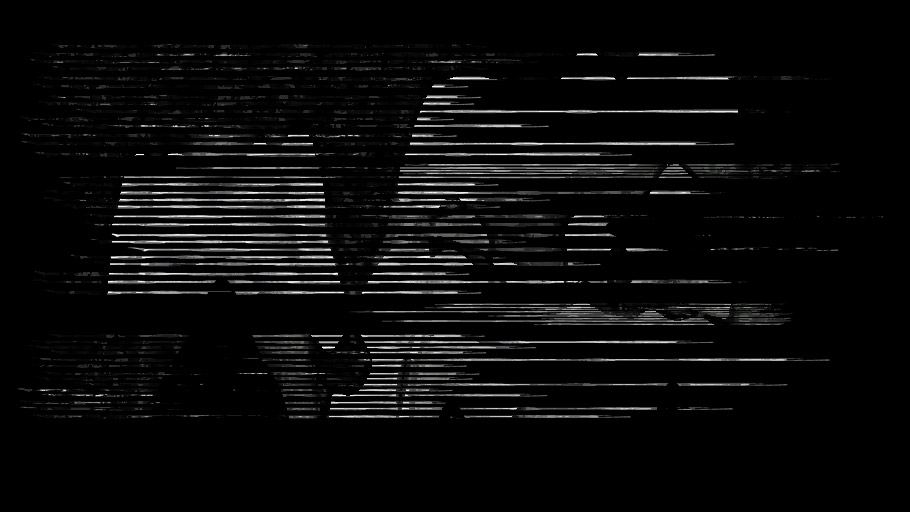
The following images show examples of patterns. You can load these patterns into Virtual ANS and play them back. The synthesizer converts them into an audio signal. Alternatively, you can also load and play audio files. The result is the original file, but with the characteristic sound of the ANS synthesizer. You can export this result as a JPG pattern.
Sovjet ANS Synthesizer
The technological basis of the invention was the method of graphical sound recording used in cinematography, which was developed simultaneously in Russia and the USA. This made it possible not only to obtain a visual image of a sound wave but also to achieve the opposite goal: the synthesis of sound from a previously hand-drawn sound spectrogram.
To achieve this, the sine waves to be generated by the soviet ANS Synthesizer are printed onto five glass discs using a special process that Murzin first had to develop. Each of the five discs features 144 individual tracks, resulting in a total of 720 microtones with discrete pitches spanning ten octaves. This yields a resolution of 1/72 of an octave, or 16.67 cents. The discs are arranged in a vertical stack, with low frequencies at the bottom and high frequencies at the top. Light modulated by the movement of these discs is then projected onto the rear of the synthesizer.
The user interface consists of a glass plate covered with a non-drying, opaque, mastic-like material, serving as a drawing surface where the user can make marks by scratching away the coating to allow light to pass through. Positioned in front of the glass plate is a vertical array of twenty photocells that transmit signals to twenty amplifiers and band-pass filters, each equipped with its own volume control. The setup is comparable to a ten-octave equalizer with two controls per octave.
The corresponding audio frequency becomes active at the points where light strikes the photocells. The ANS is thus fully polyphonic and capable of generating all 720 pitches simultaneously—though doing so would require a vertical scratch spanning the entire height.
To play back the sound, the glass plate can be moved to the left or right in front of the photocell array, directly converting the drawing into sound. In doing so, the instrument reproduces what has been recorded, much like a musical score; its function is roughly analogous to that of a player-piano roll. The movement can be performed manually or assisted by a gear motor. The playback speed is continuously adjustable down to zero; however, unlike with a tape recorder or a record player, the speed at which the score moves does not affect the pitch—it only alters the duration of the sounds and, consequently, the playback tempo.
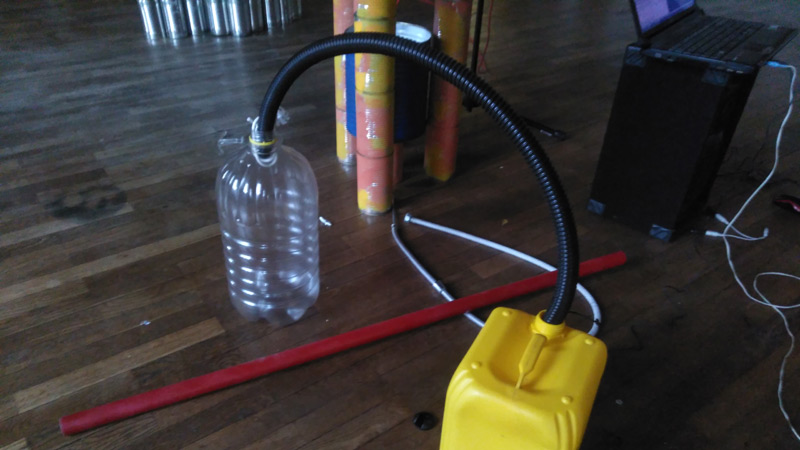
Music production with Vintage Vermona Equipment. Soundtrack with the virtual version of the soviet ANS synthesizer with the typical soviet scifi sound. Unique sample packs with percussion sound made of old cans and canisters. Sampling a condom and made a techno track. Build a D.I.Y. plate reverb for 50,00 EURO.