

When discussing legendary synthesizer manufacturers, names like Moog or Roland usually come to mind. Yet, anyone who delves deep into the history of electronic music will inevitably stumble upon Recanati, Italy—the home of Eko. Today, we take a look at the “Eko Orchestra,” an instrument that masterfully bridges the divide between the pragmatism of the solo entertainer and the status of a coveted collector’s item.
A Legacy of Innovation: From Jarre to the Living Room
To connoisseurs, the manufacturer Eko is known primarily for the extremely rare and futuristic drum machine, the “Computerhythm.” None other than Jean-Michel Jarre utilized its mechanical precision to create electronic soundscapes. The Eko Orchestra, however, was intended for a completely different target audience: it was the instrument for beginners and solo entertainers who wanted to produce immediately playable results.
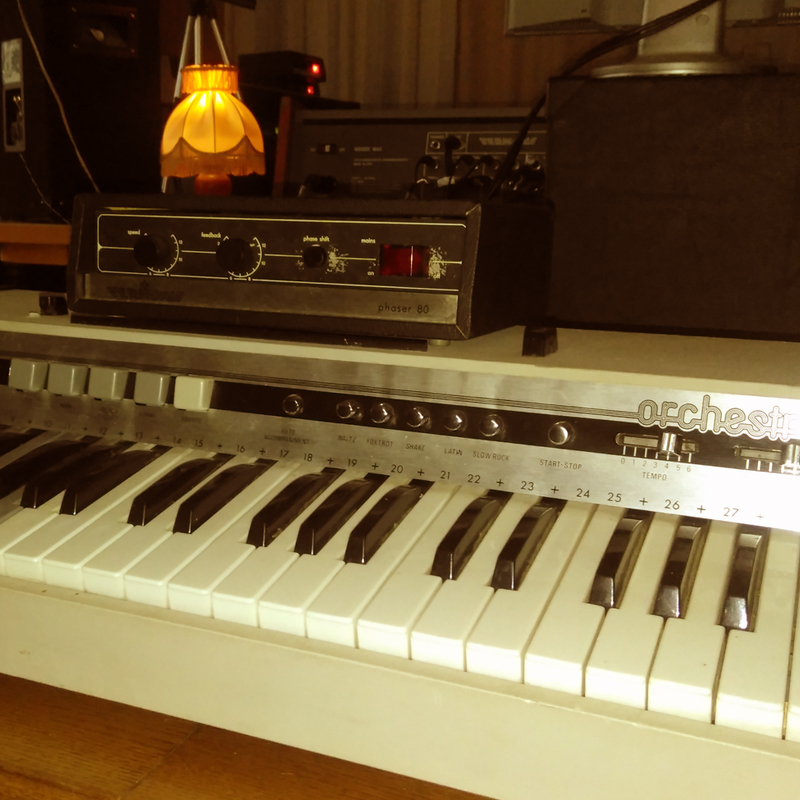
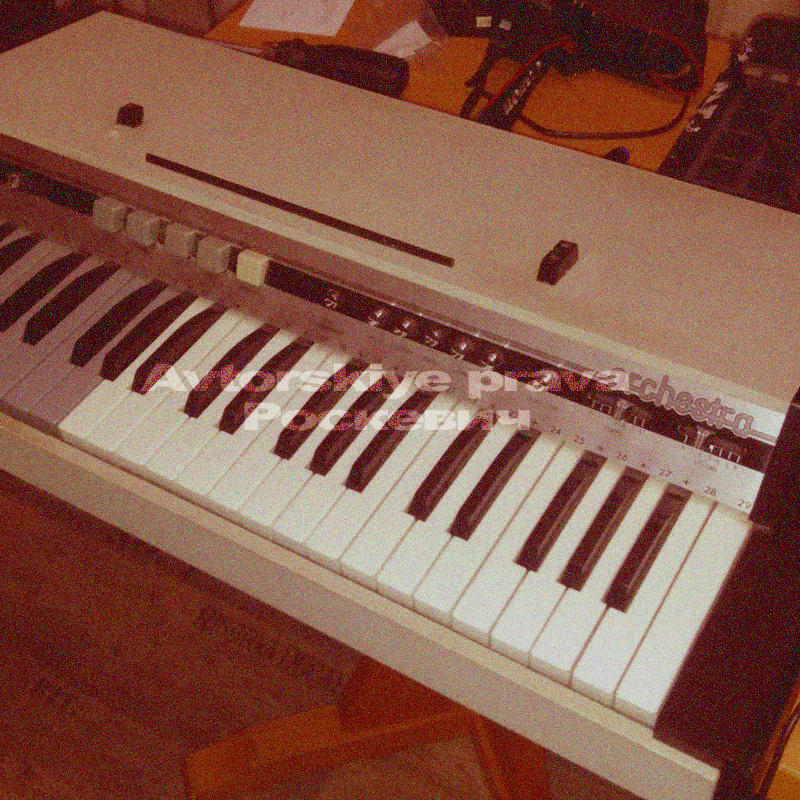
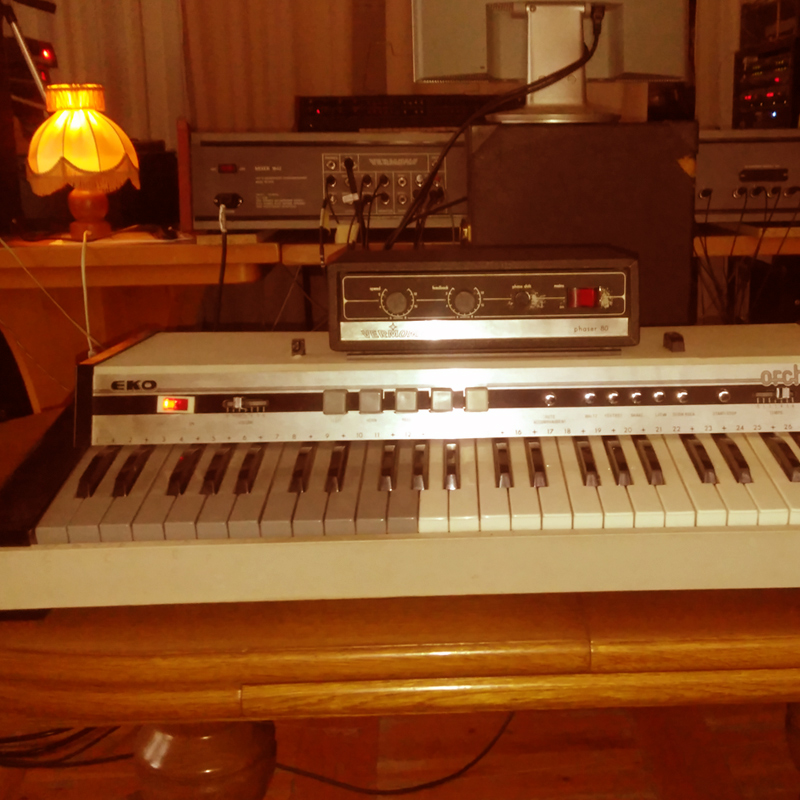
The Architecture of Simplicity
What makes the Eko Orchestra so charming today is its reduction to the essentials. It is a “plug-and-play” device in the best sense of the term:
- Sound Generation: With a handful of presets—such as Sine, Reed, or Sawtooth—it offers the classic analog waveforms. These often sound warmer and “woodier” than modern digital emulations.
- Rhythm & Accompaniment: The integrated rhythm machine delivers the typical, slightly nostalgic “pling-plong” sound of early drum modules. When combined with the automatic accompaniment, structures emerge instantly that intuitively guide you while jamming.
- Self-Sufficiency: Thanks to the built-in speaker located on the underside, the Eko Orchestra is a self-contained system. It requires no external PA to fully unfold its character within a room.
Why the Eko Orchestra is a Collector’s Item Today
In an era where we have limitless possibilities within the DAW, many producers seek out instruments with limited options. The Eko Orchestra compels the musician to make a choice; you cannot endlessly bend the sound—you must work with what the instrument offers.
Moreover, the tactile quality of Italian craftsmanship from this era is legendary. It feels like a substantial “instrument”—not a plastic toy. For vintage gear enthusiasts, it serves as the ideal entry point into the world of analog accompaniment keyboards, as it remains more affordable than the major “battleships” of the genre, yet embodies the very same historical spirit.
The Era of Electronic Music
The Eko Orchestra is more than just a keyboard for beginners. It is a historical artifact of an era when electronic music found its way to the masses. Anyone who owns one of these sturdy instruments today holds in their hands a piece of Italian engineering that proves: you don’t need a thousand parameters to accompany a good melody—sometimes, a clean sawtooth wave and a solid rhythm are all you need.