

When modern music producers think of vintage tape delays, names like the Roland Space Echo, Dynacord, or Echolette usually dominate the conversation. However, tucked away behind the historical borders of the Eastern Bloc, engineers were crafting their own distinct sonic flavors.
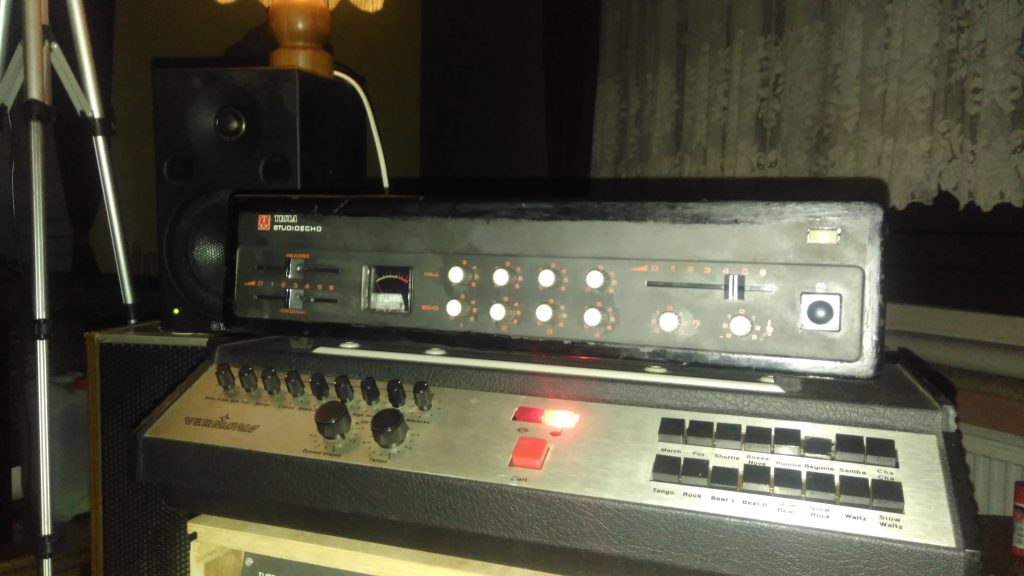
Enter the Tesla Studioecho AOS 191—a rare, rugged, and completely mesmerizing tape delay manufactured in the former Czechoslovakia (CSSR) during the early 1980s. Far from a mere “budget copy” of Western gear, the AOS 191 is a technical marvel of its time, delivering an organic, gritty, and deeply saturated analog sound that digital plugins still struggle to fully replicate.
The Birth of a Socialist Space Echo
Manufactured by the state-owned TESLA electronics conglomerate (specifically at the Vráble plant starting around 1982), the Studioecho AOS 191 represented the pinnacle of Eastern European tape delay technology. It was the direct successor to the fully discrete, transistor-based Studioecho “A” and the older Echolana series.
While Western amateur musicians were spending small fortunes on devices like the Dynacord EC 504, the AOS 191 became the go-to alternative for musicians across the Soviet bloc. To keep up with international technical trends, Tesla upgraded the internal architecture of the AOS 191 to feature integrated circuits (ICs) manufactured in-house (such as the MAA 503 operational amplifiers), transforming it into a highly sophisticated machine.
Technical Specifications: Under the Hood
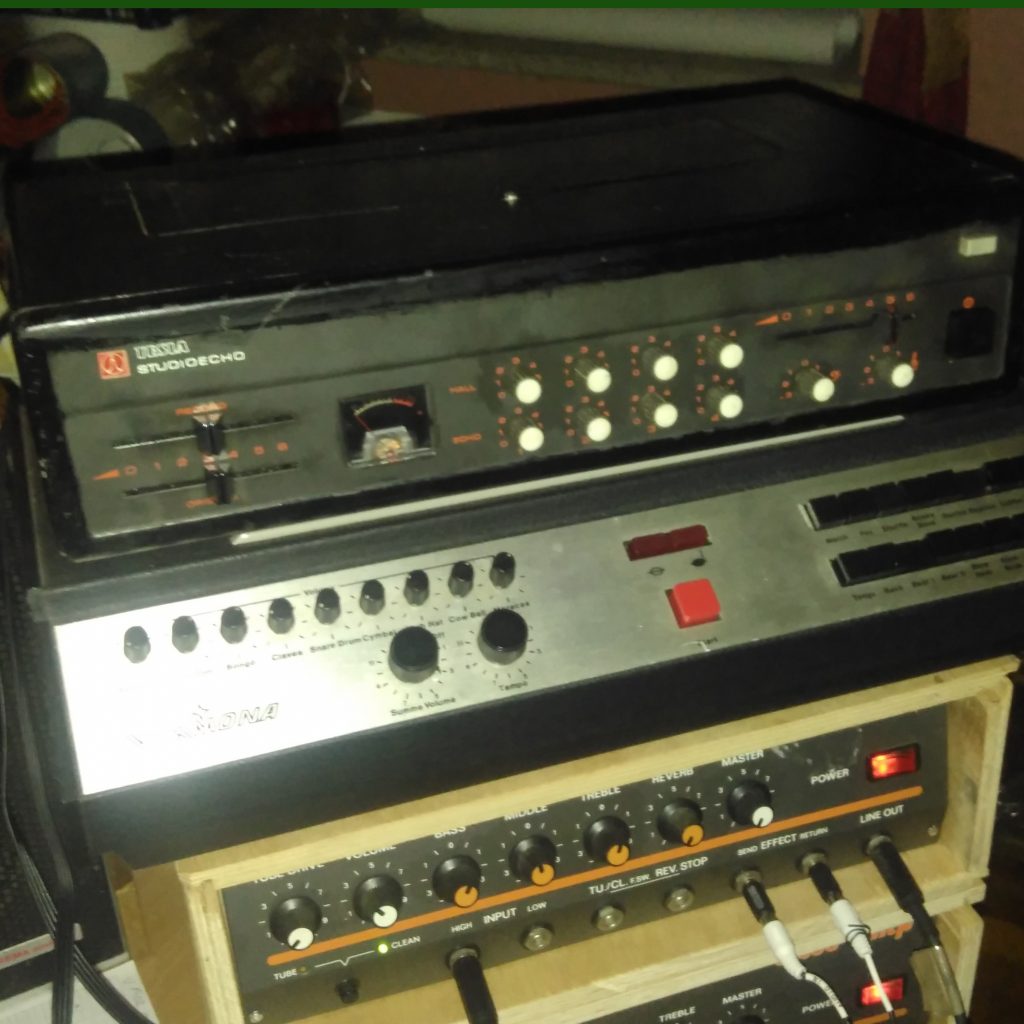
The AOS 191 is a heavy-duty, rackable desktop unit built like a tank. It relies on a continuous loop of standard quarter-inch mastering tape to capture and repeat audio.
| Feature | Specification |
| Country of Origin | Czechoslovakia (CSSR) |
| Production Era | Early 1980s (From ~1982) |
| Tape Speed | 29 cm/sec ($\pm 15\%$) |
| Tape Loop Length | 510 mm (Compatible with Agfa PE 21 / Dynacord DES 299) |
| Heads Configuration | 1x Erase, 1x Record, 4x Playback Heads |
| Delay Times | 80ms, 150ms, 225ms, and 300ms |
| Weight | Approx. 8 kg |
| Connections | 5-pin DIN (Line In / Line Out) |
The Secret Weapon: Unmatched Head Combination
What truly separates the Tesla Studioecho AOS 191 from many of its Western counterparts is its individual head control system.
The unit utilizes four fixed playback heads, spaced to provide distinct delay intervals:
- Head 1: 80 ms (Perfect for rockabilly slapback)
- Head 2: 150 ms
- Head 3: 225 ms
- Head 4: 300 ms (The maximum depth of the machine)
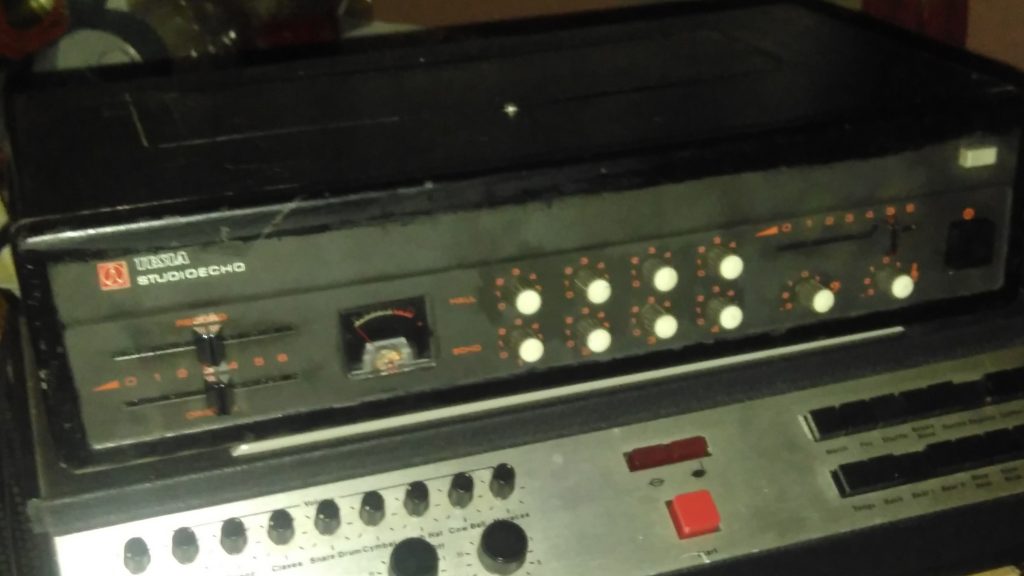
Instead of just selecting one head at a time, the front panel features four dedicated knobs for Echo and four dedicated knobs for Hall (Feedback/Reverb).
This layout allows you to mix and match the volume and feedback intensity of all four playback heads simultaneously. You can blend a subtle 80ms slapback with a heavy, self-oscillating 300ms tail, creating complex, rhythmic, and ambient textures that weren’t even possible on standard Western echo units of the era.
The Front Panel Layout & User Experience
Operating the AOS 191 is a tactile, highly rewarding experience:
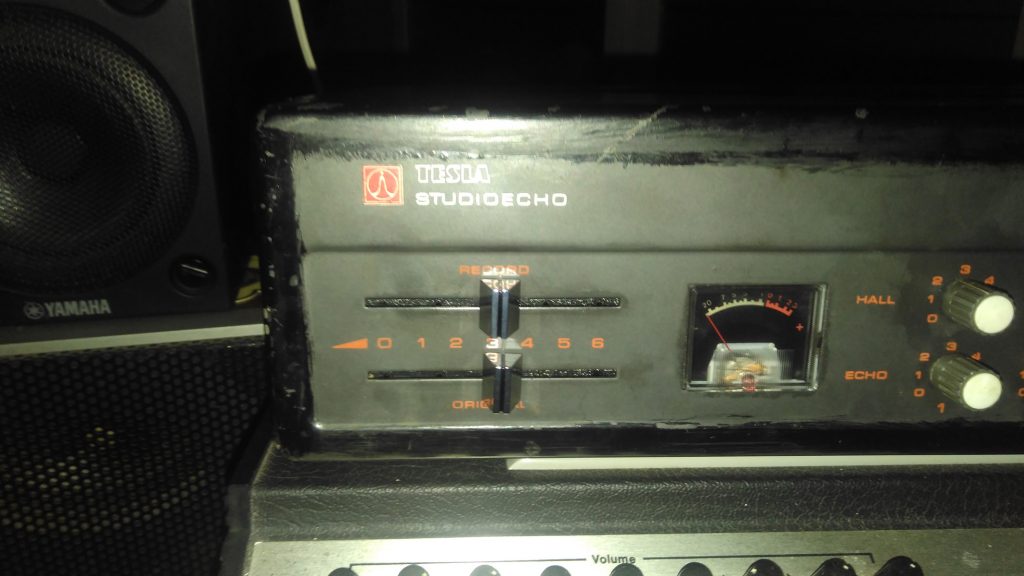
- The Sliders: It features sleek flat-track faders for Record (Output), Original (Dry Input), and Volume, allowing you to effortlessly balance your dry and wet signals.
- The Tone Controls: Onboard Low and Hi-frequency controls let you shape the dark, warm character of the repeats.
- The Motor Switch: A brilliant standalone feature is the “Tape Reel Motor” on/off button. You can keep the unit powered on to use its gritty internal preamps without spinning the motor, preserving the life of your fragile tape loop.
- The VU Meter: A classic, glowing analog VU meter dances on the front panel, letting you know exactly how hard you are pushing the input signal into saturation.
The Sonic Character: What Does it Sound Like?
The Tesla AOS 191 does not sound “clean”—and that is exactly why people love it.
Running at a snappy 29 cm/s, the initial repeats are surprisingly bright and clear, but as the tape ages and the signal passes through the Tesla-made silicon architecture, the sound degrades beautifully. The wow-and-flutter of the mechanical drive adds a natural, chorusing modulation to the echoes.
When you crank the “Hall” knobs into self-oscillation, the AOS 191 turns into a chaotic synthesizer. It generates a warm, roaring wall of sound infused with a distinct 50Hz/60Hz hum, tape hiss, and a unique Eastern Bloc grit that adds instant character to synths, vocals, or guitars. It is a dub reggae producer’s dream machine.
Modern Usability and Maintenance
If you are lucky enough to find an AOS 191 today, there are a few things to keep in mind:
- Connectivity: The unit originally uses 5-pin DIN jacks. Many vintage collectors modify these to standard 1/4″ TRS jacks for modern studio integration.
- Tape Maintenance: Like any tape machine, the heads need regular cleaning with isopropyl alcohol, and the rubber pinch rollers require specialized rubber cleaner.
- Power: The unit features a universal power transformer, usually switchable between 120V and 220V/240V via the rear fuse.
The Verdict
The Tesla Studioecho AOS 191 is a glowing example of vintage engineering ingenuity. It stands as a testament to an era when limitations bred unparalleled creativity. If you are tired of sterile digital delays and want a piece of real, unpredictable analog history that paints your audio tracks in rich colors, this CSSR relic is worth every bit of the hunt.