

The indie pop duo positron has released a new single, “Black & White.” The video premiered at the beginning of November 2025, even though there isn’t actually a video. The track runs for seven minutes in its standard version—two unusual features in the world of music. We asked positron a few questions.
Question: The long break: Twelve years is an eternity in the music business. What were the biggest challenges and the most important lessons you learned as a duo away from the spotlight during this time?
Answer: Beyond music, there are other responsibilities and areas that demand attention. We had a good year in 2012 because we recorded good songs. After that, several changes occurred that hindered our next steps, requiring new approaches—for instance, concerning our studio and rehearsal spaces. In a complex system, altering even a secondary component can sometimes bring everything to a standstill.
Question: The fresh start: Why did you decide to return after so many years with a 7-minute single instead of a radio-friendly 3-minute format? Was this a deliberate statement against the short-lived attention economy?
Answer: Yes. It was a conscious choice for several reasons, one of which was addressed in your question. Another reason was that we have multiple versions, and this full version is simply the best overall. Anyone who remembers the CD single era will recall the extended mixes and extended versions that were common back then. In those days, people often preferred listening to the extended versions over the short radio edits because the songs had actual dramatic structure. You could listen to a well-played drumbeat for two minutes without getting bored. Much of today’s music is loud and shrill, overcompressed, and lacking acoustic or musical dynamics.
Question: “Black & White” as a concept: The title suggests extreme contrasts. Which specific themes or dualistic tensions (e.g., analog vs. digital, hope vs. cynicism) did you want to explore musically in this song?
Answer: Black and white is a classic perspective that reduces things to yes and no, 1 and 0. This approach serves an important purpose when you want to understand the core of an issue. “Seeing things in black and white” is often used pejoratively, but in logic, it is precisely the right tool to grasp a complex topic. That clarity is essential to make progress in many areas—relationships, career, society. Even in photography, black-and-white photos offer higher sharpness. The lyrics explore the interplay within a relationship that seems to have hit a dead end, forming a repeating action-reaction loop with a distinct outcome.

Question: Sonic evolution: How has positron’s sound evolved over the past twelve years? What new musical or production elements were incorporated into “Black & White” that weren’t present in your earlier work?
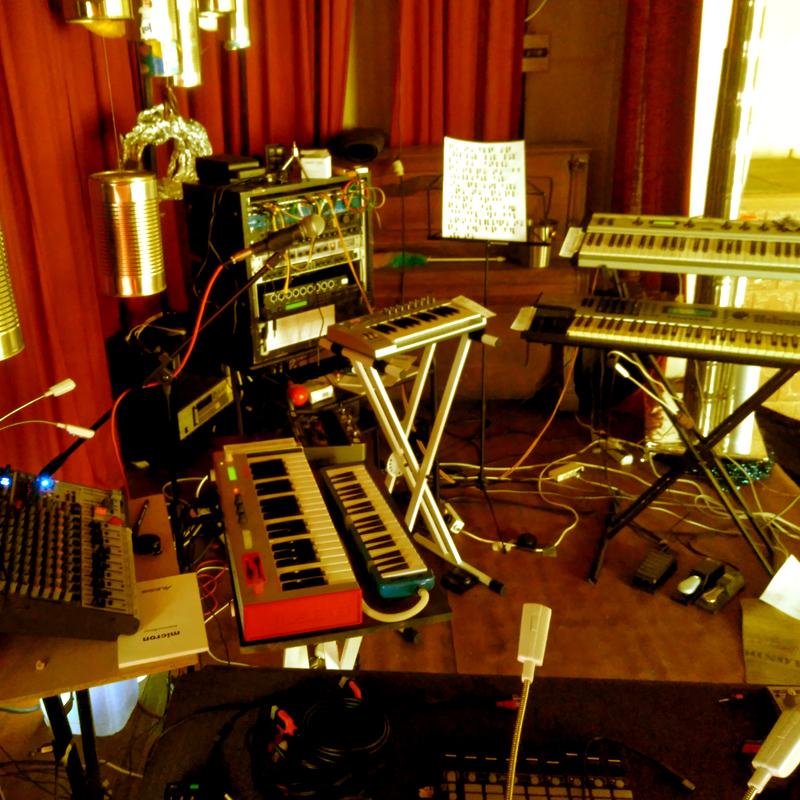
Answer: The core of “Black & White” dates back to 2009, though the demo version sounded somewhat different back then. We don’t stick to a specific sound that defines us—it’s always about what the song requires and conveys. The newly released version was remixed entirely from scratch, and several new elements were added. We kept the percussive elements of the main theme, which were generated using a Kawai K5000S. We also recorded additional airy synth pads and backing choirs to reinforce the song’s floating atmosphere.
Question: The minimalist video: The video features exclusively black-and-white gradients with no narrative plot. What effect is this intentional visual reduction meant to have on the viewer? Does it contrast with the potential complexity of the 7-minute song?
Answer: In recent years, music videos—like music itself—have become increasingly shrill. It’s driven by attention, marketing, and growing mainstream competition. But that’s a finite concept; you can’t escalate it endlessly. In the ’90s, many music videos relied on quick cuts every 1.7 seconds “so it wouldn’t get boring.” Videos have always dictated a visual frame for a song. Our brains process things visually, which is used to evoke an emotional response. On the other hand, there were one-shot videos without any cuts. Our approach with “Black & White” was to leave out the predefined image entirely, creating space for listeners to form their own. Whether a listener connects with the lyrics or the sound, everyone should generate their own visuals. After all, we don’t know what individual listeners are going through at any given moment.
Question: Artistic freedom vs. market pressure: After such a long hiatus, do you feel greater pressure today to conform to algorithms or audience expectations, or has the break granted you new freedom to make uncompromising art?
Answer: It’s primarily about the artistic result. We don’t make functional music, nor do we fit into a specific genre box. Naturally, things have changed significantly, and having formed in 2005, we’ve witnessed the dynamic evolution of the internet firsthand. Today, you really have to question the mechanics of these processes because, from an artistic standpoint, it has become completely absurd. Musicians spend more time managing social media than making music. As a musician, my job isn’t to play the court jester for bored internet users by constantly churning out content that has nothing to do with my music. In the past, there were multiple platforms to showcase new music, each with a different approach; the music was made available there, and that was that. Today, everything centers around a single streaming platform. To build an audience there, musicians are forced to produce short-form content across multiple social media platforms just to direct people to a playlist—and reformat every piece of content for each platform (vertical, horizontal, square). For many artists, that’s simply unmanageable. The problem isn’t the music; it’s the structure.
Question: The creative process: How did the songwriting for “Black & White” unfold? Was it a spontaneous creative outburst, or is the song the result of years of tweaking and development?
Answer: Both. It started with a distinct percussive theme that could be repeated endlessly, which led to an electronic demo version. It feels somewhat monotonous, yet it doesn’t get boring—it floats, in a sense. When it comes to lyrics, you often hit a wall where no suitable idea comes to mind, especially when the instrumental track already sets a strong mood. We listened to the track again, and shortly after, the lyrics came together as heard today. Structurally, there are no traditional verses or choruses—only musical ones. For a very long song, it has very concise lyrics, which creates another contrast. Subconsciously, everything seemed to fit together perfectly. The final production phase did take time, but that was a process of refining the details. There’s also an original early version and another short version, though we haven’t decided whether to release those later.
Question: Connection to earlier work: Is there a bridge or a thematic thread connecting “Black & White” to your music from twelve years ago, or do you view this song as the start of an entirely new era for positron?
Answer: Since the song—or rather, the initial idea for it—dates back to 2009, it should be seen as a thematic thread. It isn’t about setting a new sound or launching a new era. Because our sound is naturally diverse, it doesn’t wear out easily. Naturally, changes are inevitable as you gather new impressions, test new techniques, learn new skills, and update your studio gear over time.
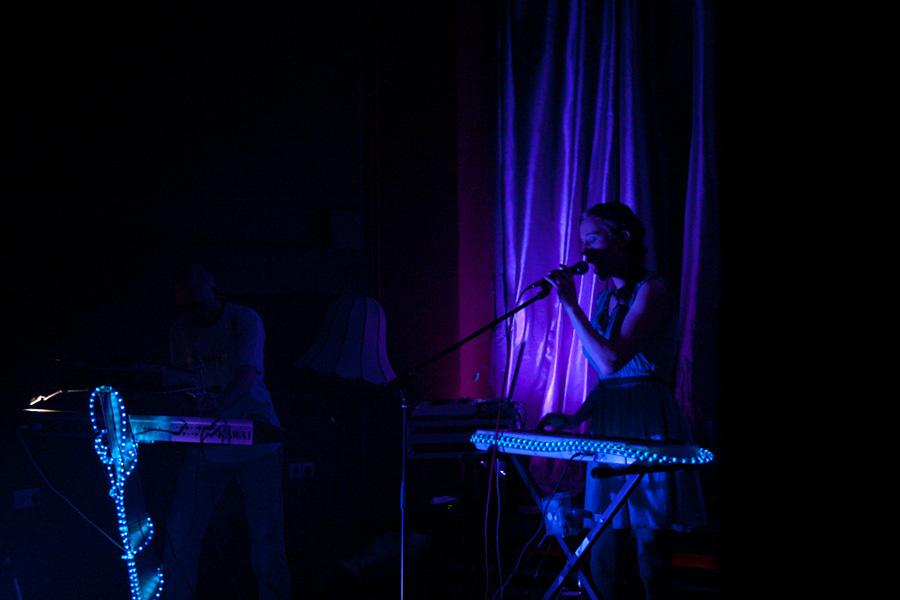
Question: The live performance: How do you plan to perform such a long, atmospheric track like “Black & White” live? Will the minimalist, abstract video concept play a role on stage as well?
Answer: Good question. We don’t have concrete plans for that yet. However, to remain consistent, we would need to execute it in a truly minimalist and abstract way. That kind of reset is necessary when everything around us constantly tries to outdo itself in shrillness. Stepping back allows people to realize that simplicity can be beautiful, too.
Question: The future: Is “Black & White” a harbinger of an upcoming album or EP? If so, can fans expect all the new material to maintain this focus on epic length and artistic contrast?
Answer: It is a precursor to an album. The exact release date isn’t set yet, as we are working on many versions and haven’t finalized the selection. The album marks our 20th anniversary, which is why we released the first single this year. It will feature new tracks alongside older songs that were never officially released and were only played live. There will also be new arrangements of older tracks that might surprise fans. We will certainly release another single before the album arrives.