

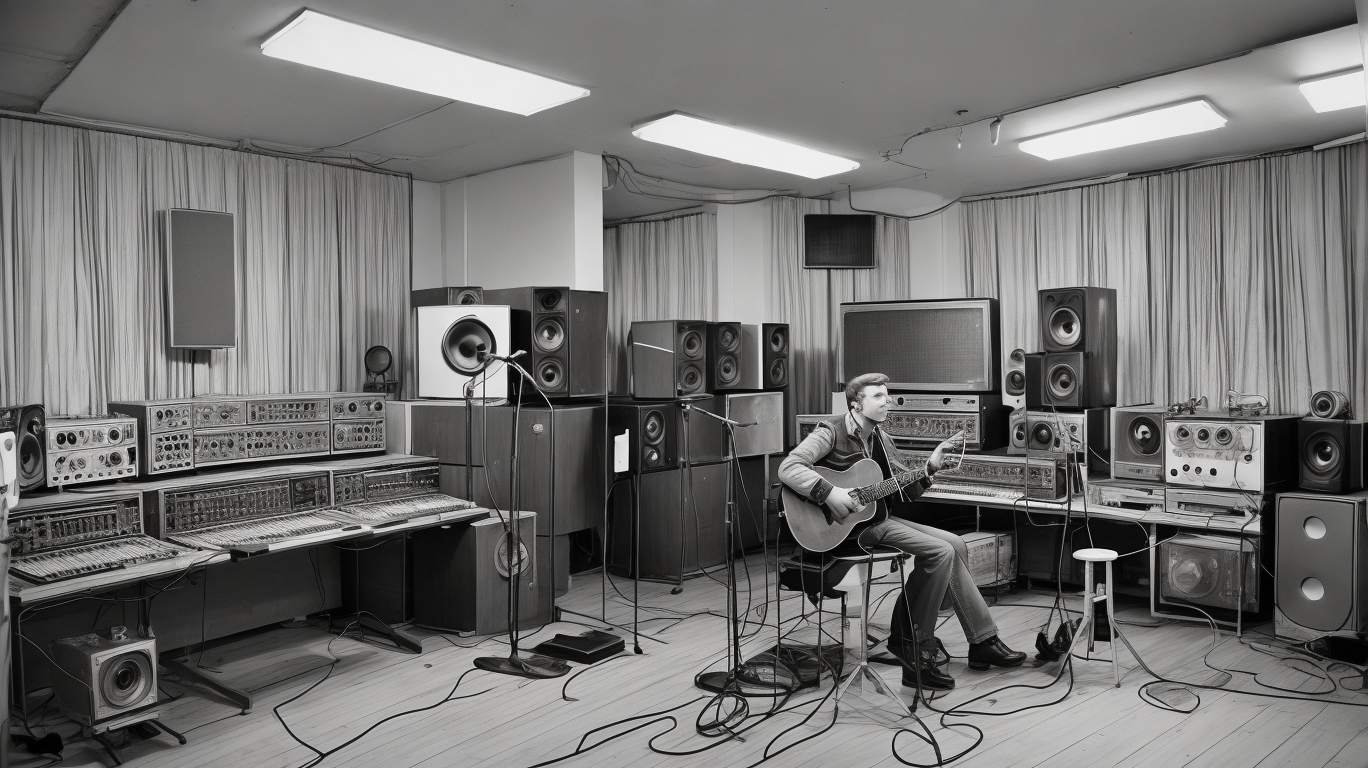
The thesis that music production is experiencing an unprecedented level of overproduction is a highly debated topic within the context of digital culture. The virtually barrier-free availability of production tools and the infinite storage capacities of digital platforms have led to an exponential increase in the volume of music being produced.
Arguments for Overproduction
- Market Saturation: The flood of new releases leads to an increasing fragmentation of the music market, making it harder for artists to stand out from the crowd.
- Loss of Quality: Quantity may come at the expense of quality, as content produced under time pressure is often less mature or refined.
- Ecological Impact: While digital music production is less material-intensive than physical production, the energy costs required for streaming services and the manufacturing of electronic devices are significant and cannot be ignored.
Counterarguments
- Democratization of Music Production: The digital revolution has made music production accessible to the masses, leading to greater diversity and innovation.
- Cultural Enrichment: The abundance of music provides an inexhaustible source of inspiration and allows everyone to develop their individual musical identity.
- Economic Aspects: The music industry has changed dramatically over the last few decades. New business models and distribution channels offer artists fresh opportunities to distribute and market their music.
Facets of Overproduction
- Algorithms and Personalization: Music streaming services use complex algorithms to tailor music recommendations to individual user preferences. This can lead to the discovery of new music, but it can also create a filter bubble.
- Artistic Freedom vs. Commercial Success: The pressure to be commercially successful can restrict artistic freedom and lead to conformity in music production.
- Quality Assurance: There is a need to develop mechanisms that ensure the quality of music productions and prevent a flood of low-quality content.
Conclusion
The overproduction of music is a complex phenomenon with far-reaching impacts on the music industry, artists, and consumers alike. It is important to consider both the positive and negative aspects of this development. A balanced assessment requires an interdisciplinary perspective that encompasses artistic, economic, and societal viewpoints.
Potential Solutions:
- Curated Platforms: Platforms that select music based on quality rather than quantity.
- Promoting Diversity: Supporting artists who create innovative and experimental music.
- Sustainability: Developing more sustainable production methods and consumption models.
- Education: Promoting comprehensive music education to increase the overall appreciation for music.
Music production with Vintage Vermona Equipment. Soundtrack with the virtual version of the soviet ANS synthesizer with the typical soviet scifi sound. Unique sample packs with percussion sound made of old cans and canisters. Sampling a condom and made a techno track. Build a D.I.Y. plate reverb for 50,00 EURO.