

Vermona E2010 Coil Equalizer from 1977: A Classic with Character
The Vermona E2010 Coil Equalizer is a graphic EQ featuring 2 x 10 bands, which can be used in either stereo or dual-mono configurations.
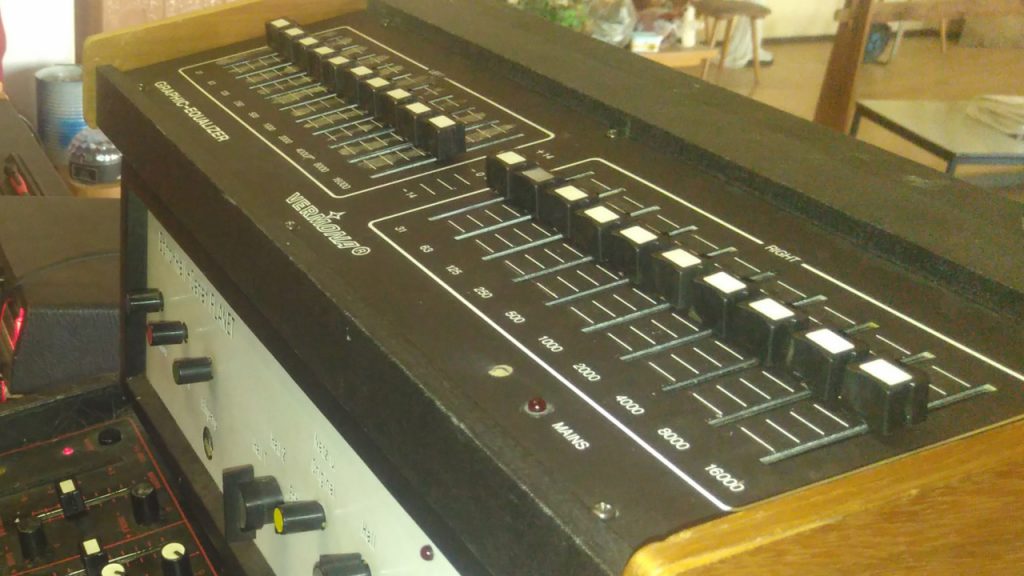
A coil equalizer—also referred to as a parametric equalizer with coils—is an analog audio device used for sound shaping. Unlike modern digital equalizers, which are based on electronic circuitry, the coil equalizer utilizes coils (inductors) and capacitors within its filter networks. This passive design imparts a distinctive warmth and natural quality to the sound, a characteristic highly prized by many audio engineers.
How does a coil equalizer work?
The heart of a coil equalizer consists of so-called LC resonant circuits, which are composed of coils (inductors) and capacitors. These resonant circuits serve as filters capable of boosting or cutting specific frequency ranges. By combining multiple such circuits, complex tonal contours can be shaped.
- Inductance: The coil stores energy in a magnetic field and acts in a frequency-dependent manner. It allows low frequencies to pass and attenuates high frequencies.
- Capacitance: The capacitor stores electrical energy and also acts in a frequency-dependent manner. It allows high frequencies to pass through and attenuates low frequencies.
Advantages of Inductor-Based Equalizers:
- Warm, Analog Sound: The passive design lends the sound a natural warmth and a three-dimensional character.
- Low Noise: Due to the absence of active electronic components, the self-noise is very low.
- High Load Capacity: Inductor-based equalizers are very robust and can handle high signal levels.
- Musical Sound Shaping: Shaping sound with a coil equalizer is often more intuitive and musical than with digital equalizers.
Disadvantages of Inductor-Based Equalizers:
- High Price: High-quality coil equalizers are often very expensive, as their manufacturing is complex.
- Significant space requirements: These devices are generally larger and heavier than digital equalizers.
- Limited number of bands: The number of adjustable frequency bands is often lower than with digital equalizers.
Areas of Application:
- Recording Studios: Coil equalizers are frequently used in recording studios to shape and enhance the sound of recordings.
- Mastering: In mastering, coil equalizers are used to fine-tune the overall sound of an album.
- Hi-Fi: Coil equalizers are also used in high-end Hi-Fi systems to adjust the sound of loudspeakers.
Other well-known manufacturers of coil equalizers:
- Pultec: The Pultec EQP-1A is one of the most famous and sought-after inductor equalizers.
- Electrodyne: Electrodyne also offers high-quality coil equalizers.
- API: API offers a combination of passive and active elements in its equalizers.
Inductor-based equalizers are a classic among audio devices, offering a unique sonic character. Although they can be complemented or replaced by modern digital equalizers, they remain an indispensable tool for many sound engineers and music producers seeking to achieve a warm and natural sound.