

Vermona Federhall (GDR) – A Classic Among Effects
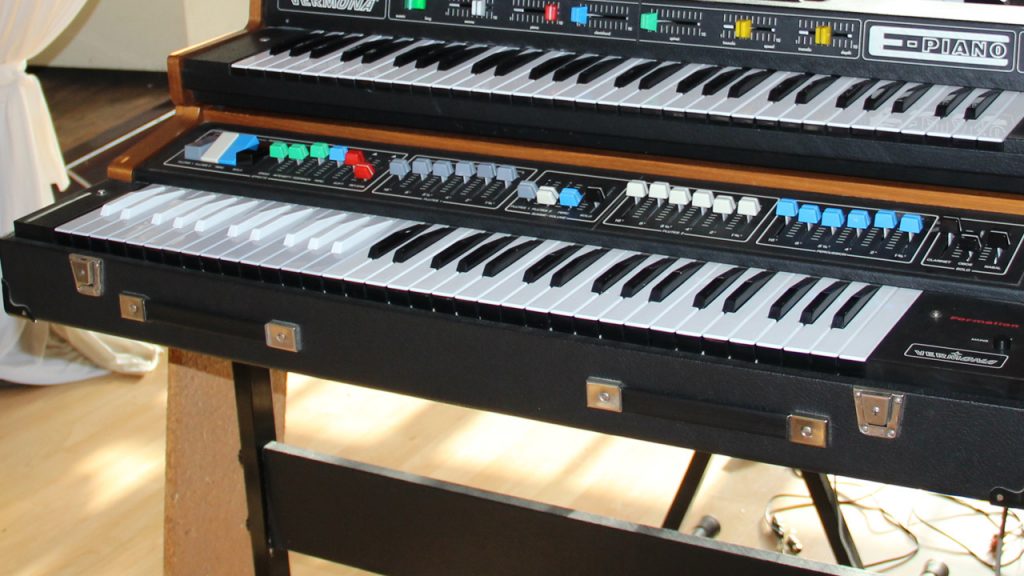
The spring reverb unit—also known simply as spring reverb—is an analog effects device renowned for its characteristic, warm, and spacious sounds. It ranks among the oldest and, at the same time, most fascinating effects in the history of electronic music. The Vermona spring reverb was inside the Vermona Organ Formation (picture)
How does a spring reverb unit work?
The heart of a spring reverb unit is a tank filled with spirally wound steel springs. A built-in transducer converts the input signal into mechanical vibrations, which propagate through the springs. At the other end of the tank, this mechanical energy is converted back into an electrical signal and amplified. The length of the springs and their tension determine the duration of the reverb.
Why does spring reverb sound so special?
- Warm, natural sounds: The mechanical generation of sound often produces warm, organic, and slightly modulated reverberant spaces.
- Modulation: The vibrations of the springs are susceptible to external influences, such as vibrations or shocks, which leads to subtle modulations and brings the sound to life.
- Characteristic Artifacts: Spring reverb units often produce characteristic artifacts—such as a slight fluttering or a subtle irregularity in the reverb—that make the sound unique.
Applications of Spring Reverb
Spring reverb units are used in a wide variety of music genres, particularly in:
- Surf Music: The characteristic, broad, and slightly distorted spring reverb is an indispensable component of the surf sound.
- Rock and Pop: Spring reverb is frequently used to add spaciousness and depth to guitar, bass, and vocal signals.
- Ambient and Experimental Music: The infinite sonic possibilities of spring reverb units make them a popular tool for adventurous musicians.
Advantages of Spring Reverb Units
- Analog Sound: The warm, analog sound is often difficult to imitate digitally.
- Versatility: Spring reverb units can produce both subtle and extreme effects.
- Robust Construction: Many spring reverb units are extremely robust and durable.
Disadvantages of spring reverb units
- Space requirements: Spring reverb units are often relatively large and heavy.
- Susceptibility to vibrations: External influences can affect the sound.
- Limited Adjustment Options: Compared to digital reverb units, spring reverb units often offer fewer adjustment options.
The spring reverb unit is a classic that, despite its simple mechanism, possesses a unique sonic character. It is a tool that holds a firm place in both music production and live performance settings. Even though modern digital reverb units offer greater flexibility, the warm, analog sound of a spring reverb remains unparalleled.